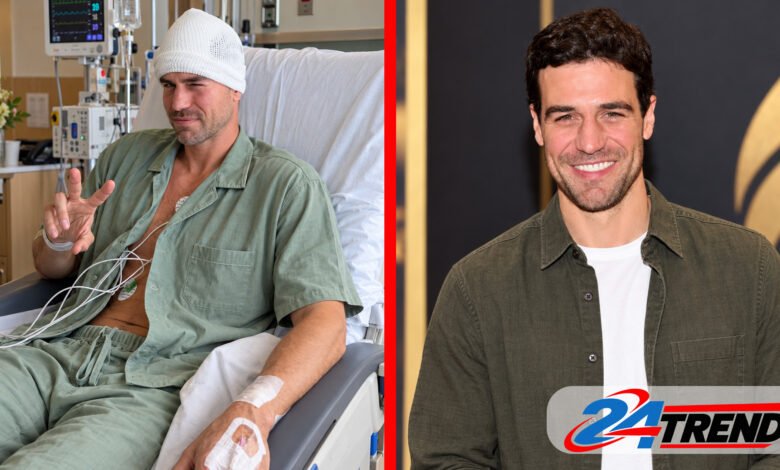
Joe Amabile, best known as Grocery Store Joe from The Bachelor franchise, has shared encouraging news about his recovery after undergoing brain surgery in August 2026. The reality television personality underwent an operation to remove a brain tumor discovered during a preventive full-body MRI scan. Doctors subsequently diagnosed him with a low-grade astrocytoma, and he has been receiving ongoing medical care.
In his latest public update, Amabile has discussed returning to running and preparing for the 2026 New York City Marathon, scheduled for November 1. Although he has made encouraging progress, his recovery has also involved challenges, including speech difficulties, anxiety, and the need to balance exercise with rest. His wife, Serena Pitt, has supported him throughout the process.
Quick Bio: Joe Amabile
| Detail | Information |
|---|---|
| Full Name | Joe Amabile |
| Known As | Grocery Store Joe |
| Profession | Reality television personality and podcast host |
| Known For | The Bachelorette, Bachelor in Paradise, Dancing with the Stars |
| Age | 40 as of October 2026 |
| Wife | Serena Pitt |
| Brain Surgery | August 2026 |
| Diagnosis | Low-grade astrocytoma |
| Current Focus | Recovery, ongoing treatment, and marathon training |
Who Is Joe Amabile?
Joe Amabile is an American reality television personality who became widely recognized through his appearances on The Bachelorette and Bachelor in Paradise. His relaxed personality and background as a Chicago grocery store owner earned him the nickname Grocery Store Joe.
He first appeared on television during Becca Kufrin’s season of The Bachelorette in 2018. Although his time on the show was brief, viewers responded to his approachable personality, helping him become a recognizable member of Bachelor Nation.
Later in 2018, Amabile appeared on Bachelor in Paradise and competed on Dancing with the Stars, where he reached the semifinal round. He returned to Bachelor in Paradise in 2021, where he met Serena Pitt.
The couple became engaged during the show’s seventh season and married in a courthouse ceremony in New York City in October 2022. They later celebrated with a larger wedding in Charleston, South Carolina, in 2023.
Beyond television, Amabile has worked on podcasts with Pitt, discussing relationships, marriage, everyday experiences, and life beyond reality television.
His health became a major topic of public interest in 2026 after doctors discovered an unexpected abnormality in his brain.
What Happened During Joe Amabile’s Brain Surgery?
Amabile’s medical journey began when he and Pitt underwent preventive whole-body MRI scans. He had not experienced symptoms that made him suspect a brain problem, so the discovery came as a surprise.
The scan revealed a lesion approximately the size of a blueberry in his brain. Follow-up imaging suggested that it could be a glioma, a type of tumor that develops in glial cells or related supporting cells in the central nervous system.
Doctors recommended surgery to remove the lesion and determine exactly what it was. The procedure, known as a craniotomy, allows surgeons to access the brain by temporarily removing a section of the skull.
Amabile underwent the operation at NYU Langone Health on August 5, 2026. The following day, he shared photographs from the hospital and announced that doctors had successfully removed the tumor.
His wife also shared an encouraging update, explaining that the medical team had removed the entire tumor and that he was recovering well.
The successful operation was an important milestone, but it did not mean that all medical concerns had ended. The removed tissue needed to be examined, and his doctors still had to determine the appropriate long-term treatment and monitoring plan.
Want to discover more celebrity news, trending stories, and fascinating details about your favorite stars? Read our latest trending article:
[Jessi Draper Announces New Memoir: What She Plans to Reveal]
Joe Amabile’s Diagnosis and Ongoing Treatment
On August 12, Amabile revealed that doctors had diagnosed him with a very low-grade astrocytoma. Subsequent medical information identified it as a grade 2 IDH-mutant diffuse astrocytoma.
An astrocytoma is a type of brain tumor associated with astrocytes, cells that support the normal functioning of the nervous system. Grade 2 tumors generally grow more slowly than higher-grade astrocytomas, although their behavior and treatment needs vary.
Amabile’s diagnosis required continued medical attention despite the successful removal of the visible tumor.
His treatment plan includes vorasidenib, a targeted medication approved by the US Food and Drug Administration in 2024 for certain patients with grade 2 IDH-mutant gliomas. His medical team also plans regular MRI scans to monitor his condition and watch for signs of tumor growth.
These follow-up scans are important because removing a tumor does not eliminate the need for long-term surveillance. The precise course of treatment depends on the patient’s diagnosis, surgical findings, and response to care.
Amabile has spoken publicly about the experience, helping followers understand that a positive surgical result can still involve an extended period of medical monitoring.
His case also illustrates why doctors may recommend further testing when an unexpected abnormality appears on imaging, even when a person feels healthy.
How Is Joe Amabile Recovering After Surgery?
In the weeks following surgery, Amabile reported steady improvement but acknowledged that recovery was not completely straightforward.
During an August appearance on Good Morning America, he discussed lingering speech difficulties. He explained that he could think of the words he wanted to say but sometimes struggled to express them aloud.
By that point, he estimated that his speech had returned to approximately 90 percent of its previous ability.
The location of the tumor was particularly relevant because the affected area was associated with speech, motor skills, and memory. His doctors had discussed the possibility of temporary difficulties following the operation.
Amabile also described the physical and emotional demands of recovery. In September, he shared several challenges, including anxiety, sensitivity to too much screen time, uncertainty about socializing, and the temptation to resume activities too quickly.
Sleep became another important consideration. He recognized that his body needed more rest than he had typically allowed himself before surgery.
These experiences show why recovery cannot be measured by the success of an operation alone. Regaining strength, managing symptoms, adjusting to treatment, and rebuilding confidence can all take time.
Although his progress has been encouraging, Amabile’s public updates do not establish that every symptom has disappeared. His medical team remains responsible for assessing his recovery and advising him about activity levels.
Joe Amabile Plans to Run the 2026 New York City Marathon
One of the most notable developments in Amabile’s recovery is his plan to participate in the 2026 New York City Marathon on November 1.
Running has been part of his life before his diagnosis, and preparing for the race has given him a specific goal during a difficult period.
According to recent reporting published in October, his medical team cleared him to resume running after surgery. He returned to the activity relatively quickly, completing a short run approximately 15 days after the operation.
However, his early return also taught him the importance of pacing himself. He has discussed experiencing fatigue and needing additional rest after some training sessions.
Rather than treating the marathon as a test of endurance at any cost, he has adjusted his preparation to account for his recent surgery. His training has included shorter runs and more recovery time.
The event is scheduled for November 1, 2026, and represents a personal milestone following a major health challenge.
Still, participating in the marathon does not mean his medical journey is over. He continues to need follow-up care and must remain attentive to his body’s response to exercise.
His plans are best understood as a sign of returning to an important personal activity while adapting to new health considerations, rather than proof of a complete recovery.
Serena Pitt’s Support Throughout His Health Journey
Serena Pitt has played an important role in supporting Amabile through diagnosis, surgery, and recovery.
The couple first met on Bachelor in Paradise in 2021 and built their relationship in front of television audiences. Their marriage has since continued outside the show’s filming environment, with both sharing selected aspects of their lives through podcasts and social media.
When the brain lesion was discovered, Pitt was involved in the process of seeking additional medical information and preparing for surgery.
She also shared updates after the operation, expressing gratitude to the medical team and confirming that her husband was recovering well.
The experience was emotionally demanding for both of them. In public interviews, Pitt described the difficulty of seeing her partner face an unexpected medical problem and the importance of having support during treatment.
Amabile has likewise discussed the value of having his wife and family nearby throughout the recovery period.
Their public updates have offered followers a clearer understanding of how a serious diagnosis can affect a couple, even when the initial treatment produces an encouraging result.
They have also helped keep the focus on confirmed medical developments rather than unverified speculation about his condition.
Conclusion
Joe Amabile has made encouraging progress since undergoing brain surgery in August 2026. Doctors removed his tumor, and subsequent testing identified a grade 2 IDH-mutant diffuse astrocytoma. He has discussed improvements in his speech, ongoing treatment, and the challenges of adjusting to life after surgery.
His plan to run the New York City Marathon on November 1 offers a meaningful goal as he returns to familiar activities. However, regular scans, medication, and medical supervision remain important parts of his care.
For fans following Joe Amabile, the central update is hopeful but measured: he is rebuilding his routine while continuing to manage a serious health condition.
(FAQs)
What happened to Joe Amabile?
Joe Amabile underwent brain surgery in August 2026 after a preventive MRI revealed a small brain tumor. Surgeons removed the tumor, and subsequent testing identified a grade 2 IDH-mutant diffuse astrocytoma. He has since shared updates about his recovery, speech improvement, ongoing treatment, and return to running.
What type of brain tumor did Joe Amabile have?
Joe Amabile was diagnosed with a grade 2 IDH-mutant diffuse astrocytoma. This is a type of glioma that generally grows more slowly than higher-grade tumors. Although doctors successfully removed the tumor, his treatment plan includes medication and regular MRI monitoring to assess his condition over time.
Is Joe Amabile recovering well after brain surgery?
Amabile has reported encouraging progress, including improvements in his speech and a gradual return to exercise. However, he has also described anxiety, fatigue, and difficulties adjusting to activities after surgery. His recovery remains an ongoing process, with medical monitoring and appropriate rest still important.
Is Joe Amabile running the New York City Marathon in 2026?
Yes. As of October 2026, Amabile plans to run the New York City Marathon on November 1. He has returned to training after receiving medical clearance, but he has adjusted his routine to allow more recovery time following surgery.
Who is Joe Amabile’s wife?
Joe Amabile is married to Serena Pitt, whom he met during the seventh season of Bachelor in Paradise in 2021. They became engaged during the show’s finale, married in New York City in October 2022, and held a larger wedding celebration in Charleston in 2023.
Will Joe Amabile need further treatment after surgery?
Yes. His reported treatment plan includes vorasidenib, a targeted medication, and regular MRI scans to monitor for potential tumor growth. The schedule and duration of follow-up care depend on his medical team’s assessment. The successful removal of the tumor does not eliminate the need for continued monitoring.






2 Comments